By Thomas Lemmer. Published in the Winter 2025 issue of Command Magazine by the Illinois Association of Chiefs of Police.
Excerpt: Gratitude must be a guiding factor in how police leaders perform their duties. How they express appreciation is important. When members go “above and beyond” their assigned duties do supervisors express gratitude? Doing so provides encouragement to all members to embrace their duties. Failing to do so can leave those putting in the greatest effort to conclude their efforts are not valued.
Additionally, demonstrating that the efforts of their officers are appreciated contributes to the overall wellness of both the officers and the supervisors expressing gratitude. People receiving gratitude tend to become more grateful themselves, and grateful people experience improved physical and mental health. They are more optimistic, and deal with adversity better. These are clearly valuable traits to encourage among our officers.
Read the full article below.
Click here to open in desktop full screen or your mobile PDF viewer.
Under the Gratitude Leading Leadership Model, wellness and positive attitudes about the work and mission of an agency are fostered when its members believe that their efforts are known and appreciated. Expressions of gratitude are an important aspect of leadership.
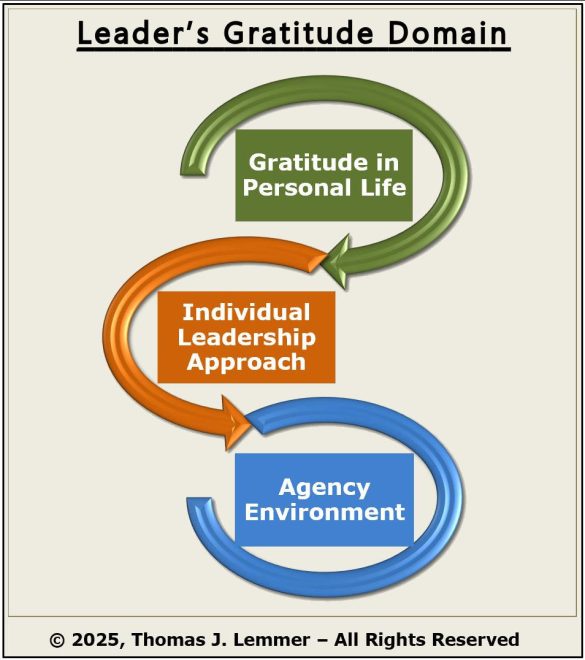
A leader’s capacity and effectiveness in understanding and harnessing the power of gratitude exists and develops within three subdomains. (1) The leader’s personal life. (2) The leader’s individual leadership approach. (3) The overall agency (group/team/unit) environment.
(c) Thomas Lemmer, 2025
Learn More
This article is directly related to several of our officer wellness, engagement, and leadership training courses. Comprehensive training courses, as well as direct client consulting services in the areas of officer wellness and the mission of policing, are available from Secure 1776.
Other topic areas include: community policing, juvenile crime, gangs, violence, patrol operations, internal investigations, supervisory engagement, and management accountability. Learn more by visiting our Training and Consulting Services section.
We are interested in your thoughts, and invite you to comment below.