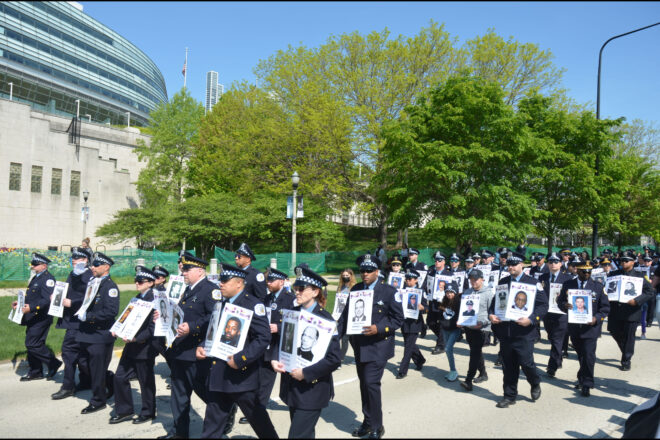
When we first think about the topic of leadership, we often make an immediate association with a person holding a formal title. Yet leadership is a far more comprehensive concept, particularly in professions where lives can be on the line. Events in policing can spiral into crisis quickly, requiring immediate action to prevent or respond to tragedy. Such are leadership moments, even when no formal leader is on the scene.
Each police officer, even those not holding a formal rank has the sworn duty to lead by example on two key levels. First, within the community that the officer serves. Second, among the other members of the officer’s unit, department, and profession. The best formal leaders understand that fundamentally, leadership is about persuasion. These leaders, draw upon their own informal (or relational) leadership abilities, and they do not rely upon the power of their rank alone to get others to act. They inspire.
The best leaders understand that leadership is more than words – it is the full expression of all of their actions. They develop and draw upon the skills of those around them. They understand a fundamental truth. In life, none of us can do absolutely everything ourselves. This is true for the newest police officer, and for the chief of police. The best formal leaders seek to build a highly-effective organization, which is comprised of highly-effective individuals, performing at all-levels within the group. Each individual officer – for their part of the mission – is the “key piece of the puzzle” that makes it all work. It is a responsibility of those holding formal leadership positions, to help everyone within their organization understand this core principle. In policing, leadership is an all-levels responsibility.
Does Your Badge Mean Anything?
If every person always obeyed the law, the police profession would not be necessary. And if the mere presence of a police officer resolved all violations, officers would never need to initiate force and they would not themselves suffer physical attacks. But this is not the reality. There are dangers, and addressing lawlessness always falls squarely on the shoulders of someone wearing a badge. Being proactive is an essential mindset for the police officer on patrol.
Fans of classic television will remember the character Deputy Barney Fife (Don Knotts) from the Andy Griffith Show. The situation in this 1960s sit-com was small town life in Mayberry, North Carolina, as seen through the eyes of Sheriff Andy Taylor (Andy Griffith). The comedic portrayal of Deputy Fife, who usually has few crimes to solve, is often critical, as “Fearless Fife” does have fears. But Deputy Fife also has a passion for his profession that offers an opportunity for clarity on what everyone who wears a badge must be prepared to do. Being responsible to enforce the law is not a joke.
How officers see their role and how they carry themselves matters. Police leaders at the supervisory excellence level build an agency environment of courage that enhances the ability of officers to meet the challenges of their mission within a framework of constitutional policing.
Building the Knowledge to Move Forward
This course builds upon our video below, “All Levels Responsibility,” from our ongoing Leadership Video Series.
Meeting the challenges currently faced by our law enforcement agencies will not he easy. Highly-effective organizations embrace an all-levels leadership approach. Elements of this course are interwoven into the two-hour and half-day seminar versions of our “Confronting a ‘Tragedy-Free Policing, Or Else’ Standard” course.
Need Assistance? Contact Us Now
To learn more about this course, or to start the scheduling process, please fill out the below form or email us at admin@Secure1776.us.
We can also assist your agency with research, onsite inspections, accountability approaches, policy development, performance assessments, process evaluations, supervisory engagement, and operational planning. Customized training and consulting options are possible to meet the specific needs of your agency.
Contact us now, by completing our contact form or emailing us at admin@secure1776.us.