
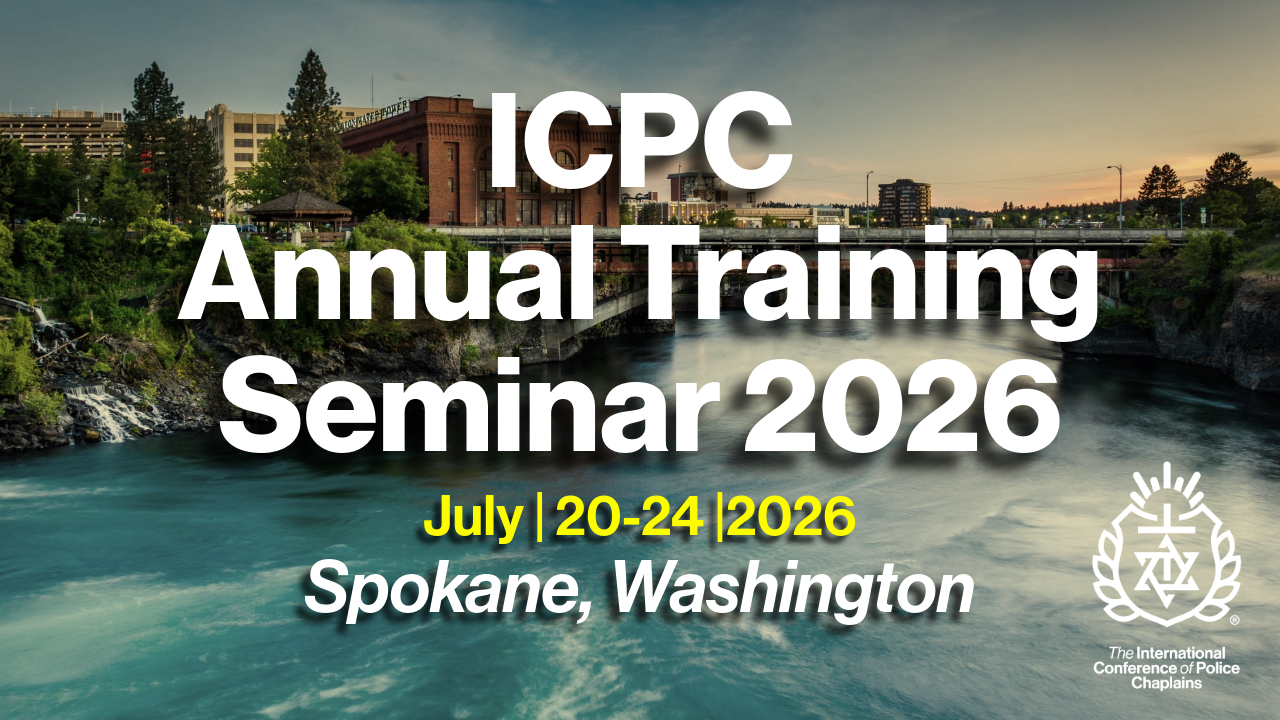
Thomas Lemmer has once again been invited to instruct to police chaplains. This time, in Spokane, Washington, at the annual training seminar for the International Conference of Police Chaplains (ICPC). The seminar will be held during the week of 20 July 2026. The ICPC is the leading association advancing law enforcement chaplaincy. It has members from all 50 American states and more than 20 countries. Lemmer will be building upon his keynote address from this past March at the ICPC’s Midwest Regional Conference. At the upcoming international conference, he will present on Gratitude Leading Leadership, and he will conduct a plenary session on “why faith” in policing is so important.
Estimated reading time: 6 minutes
Adversity and the Challenges of Policing
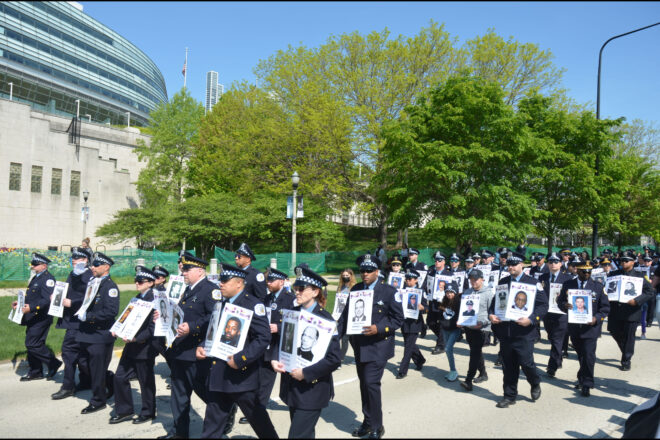
Policing is a challenging profession, in Chicago and everywhere else. After more than 34 years of active service in the Chicago Police Department (CPD), Lemmer has identified adversity as a point requiring far more consideration. His own experiences interacting with CPD’s amazing chaplains provide clarity on a second point. Police chaplains provide crucial support to our police officers and their families. CPD’s chaplains take particular care in bringing enduring support to Chicago’s Gold Star Families. This support provided by the chaplains brings both comfort and confidence that strengthens the resiliency of those sworn to protect others.

In this life there is suffering and evil is real. In every life there will be trials and tribulations. Adversity tests our readiness and commitment, and reveals our character. Yes, we want our police officers to get through the trials that they will encounter. But, just getting through adversity should not be their goal or ours. Whenever adversity comes, we must remember and instruct that iron sharpens iron. Adversity provides the means from which endurance and strength can be built. Our communities are stronger and safer when our police officers endure adversity well and emerge stronger, with a renewed sense of faith and purpose. Police chaplains help our officers tap into their own faith, which is the most powerful tool in embracing adversity.
Faith in Policing
In his 2025 Christmas editorial, Lemmer wrote about the value of faithful police officers. He observed, “among the greatest gifts we receive is not one found wrapped under the tree. It is the far more enduring gift of faith in policing.”
He added: “Every officer has a duty to do what is right and true, even if no other person hears or sees their actions. When we know God, we know that no matter how much authority we may have in this world, there is a higher power. In this knowledge, we understand that our actions are always known. We know that no one who engages in evil escapes God’s judgment, and that the path to redemption is only possible through God. The faith of those police officers who believe in God impacts how they carry out their duties. Such beliefs are consistent with the needs of a free people, and such faith benefits the entire community.”
The Importance of Police Chaplains
Providing in-service training for members of the police profession is always a valued opportunity. So too is the opportunity to provide encouragement to people of faith who are committed to providing chaplain services to our officers. Through our chaplains, officers receive much needed guidance and support in successfully addressing the realities and challenges they face.
In his editorial, Lemmer also wrote on the importance of faith for our officers themselves. “We should not ask our officers to meet their responsibilities without the strength that comes through faith.”
He continued: “Through their faith, the wellness of those doing the work in policing is strengthened. Clearly, the entire community benefits from healthy, emotionally-stable police officers. Our communities are stronger and safer when our police officers endure adversity well, embrace it, and emerge stronger, with a renewed sense of faith and purpose.”

Gratitude and Policing
Faith can help us find reason for gratitude, even in the midst and aftermath of extreme adversity. From our own life experiences, it is easier to do difficult things for others when we feel they are grateful for our efforts. This reality is inherently understood, which raises a key leadership question. Overall, are our law enforcement agencies ones that their members would describe as being places where gratitude is a priority? Chaplains can help an agency postively answer this core question.
There are several related questions police leaders must also be asking. When members go “above and beyond” their assigned duties is some form of “thank you” appropriate? When leaders do not convey gratitude for extra and exceptional efforts, are there consequences? Does a lack of gratitude pose officer wellness issues? Do only those who directly receive a “thank you” receive some benefit in the expression of gratitude? Additionally, when members merely do the work they are paid to do, are they also “owed” some expression of gratitude? Should gratitude be a guiding factor in how police leaders lead? How might core management activities be impacted by a “gratitude leading” leadership approach?
Seminar Registration and ICPC Membership
The 53rd Annual ICPC Training Seminar will be held 20-24 July 2026 at the Centennial Hotel, 303 W. North River Drive, Spokane, Washington. Police chaplains interested in attending the conference can learn more and register here.
For police chaplains, who are not yet members of the ICPC, the organization offers the following guidance. “The ICPC is a global family of individuals dedicated to supporting those who serve on the front lines. Ours is a ministry of presence—proactively walking alongside officers through critical incidents, offering guidance to their families, and championing wellness practices that remove the stigma associated with seeking and receiving help. We serve those who think only of the service they can give. Often, we are the only ones from whom they will receive it.” Learn more about the organization and apply for membership here.
Police Agency Outreach
For police agencies, who do not currently have a chaplaincy program, the ICPC offers the following additional guidance. “Over the course of their career, the daily emotional and mental challenges faced by your officers have profound cumulative impact on their quality of life and the quality of life of those who depend on them. They have a job to do, and we’re here to make sure they have a life to get back to at the end of the day, and at the end of their service.” Learn more about the organization and how to begin a police chaplains program here.
We are interested in your thoughts, and invite you to comment below.

There’s no person more qualified to present on this topic than Tom Lemmer. Chaplins play a critically important rile in brining meaning to the insanity police officers deal with. Congratulations Tom.
Thank you for the positive assessment and encouragement. We appreciate your continued leadership.